MySQL Database Management

- Description
- Curriculum
- FAQ
- Notice
- Reviews
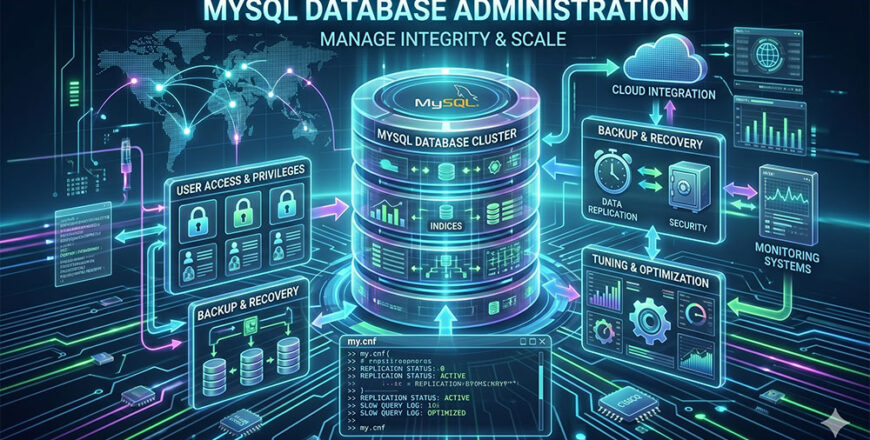
Welcome to MySQL Database Administration, an intensive, self-paced, text-based course designed to make you a master of the world’s most popular open-source relational database management system (RDBMS). Hosted by Generiss Academy, this course transitions you from a simple query-writer to an enterprise-grade database guardian.
Through comprehensive, reading-driven modules, step-by-step terminal configurations, and practical architectural breakdowns, you will conquer the intricacies of database architecture. You will learn to manage user privileges, optimize complex storage engines, design flawless backup and recovery strategies, and implement secure replication across distributed environments. Because this course is 100% text-based, you won’t waste time scrubbing through slow video tutorials. Instead, you can read code, analyze execution plans, and interact with configuration files at your exact speed of absorption.
-
1
 Introduction
 -
2
Lesson 1: Flat File Databases
-
3
Lesson 2: Drawbacks of Flat File Databases
-
4
Lesson 3: Database Management System
-
5
Lesson 4: Usage of DBMS
-
6
Lesson 5: Functionalities of Database System
-
7
Lesson 6: Data Models
-
8
Lesson 7: RDBMS and 12 Rules
-
9
Lesson 8: Properties of Relations
-
10
Lesson 9: Keys and Referential Integrity
-
11
 Module 1 Revision QuizModule 1 Revision Quiz
 -
12
Answer Key and Explanations
-
13
Introduction
-
14
Lesson 1: Common Table Expressions
-
15
Lesson 2: Persistent Runtime Configuration Changes
-
16
Lesson 3: MySQL Privilege Tables are now InnoDB
-
17
Lesson 4: Global Data Dictionary
-
18
Lesson 5: Optimizer Hints
-
19
Lesson 6: Invisible Indexes
-
20
Lesson 7: Deadlock Detection Can Now Be Disabled
-
21
Lesson 8: InnoDB Buffer Pool Mutex Removed
-
22
Lesson 9: Auto-Increment Counter Persistence
-
23
Lesson 10: UUID_TO_BIN() and BIN_TO_UUID() Functions
-
24
Lesson 11: Default Character Set and Collation
-
25
Lesson 12: Cost Model Improvements
-
26
Module 2 Revision QuizModule 2 Revision Quiz
-
27
Answer Key and Explanations
-
28
Module Overview and Introduction
-
29
Lesson 1: Client/Server Overview
-
30
Lesson 2: Communication Protocols
-
31
Lesson 3: The SQL Parser and Storage Engine Tiers
-
32
Lesson 4: How MySQL Uses Disk Space
-
33
Lesson 5: How MySQL Uses Memory
-
34
Lab Assignment: Examining the Architecture
-
35
Revision QuizRevision Quiz
-
36
Module Overview and Introduction
-
37
Lesson 1: MySQL Distributions
-
38
Lesson 2: Installing on Windows
-
39
Lesson 3: Installing on Linux and UNIX
-
40
Lesson 4: Starting and Stopping on Windows
-
41
Lesson 5: Starting and Stopping on UNIX/Linux
-
42
Lesson 6: Configuration
-
43
Lesson 7: Log and Status Files
-
44
Lesson 8: The Default SQL Mode
-
45
Lesson 9: Time Zone Tables
-
46
Lesson 10: Some Security Issues
-
47
Lesson 11: Upgrading
-
48
Lab Assignment: Installing, Configuring, Stopping and Starting
-
49
Revision QuizRevision Quiz
-
50
Answer Key and Explanations
-
51
Module Overview and Introduction
-
52
Lesson 1: MySQL Error Messages
-
53
Lesson 2: The SHOW Statement
-
54
Lesson 3: SQL Modes
-
55
Lesson 4: The PERROR Utility
-
56
Lesson 5: The Log
-
57
Lesson 6: The Error Log
-
58
Lesson 7: The Slow Query Log
-
59
Lab Assignment: Interpreting Error and Diagnostic Information
-
60
Module 5 Revision QuizModule 5 Revision Quiz
-
61
Answer Explanations
-
70
Module Introduction
-
71
Lesson 1: Introduction to Database Storage Engines and InnoDB
-
72
Lesson 2: Core Features of InnoDB
-
73
Lesson 3: Understanding Transactions and Isolation Levels
-
74
Lesson 4: Referential Integrity and Foreign Keys
-
75
Lesson 5: Physical Characteristics of InnoDB Tables
-
76
Lesson 6: Tablespace Configuration
-
77
Lesson 7: Log File and Buffer Configuration
-
78
Lesson 8: Monitoring and Analyzing InnoDB Status
-
79
Lesson 9: Lab Assignment: Using the InnoDB Engine
-
80
Module 7 Revision QuizModule 7 Revision Quiz
-
81
Quiz Answers and Explanations
-
82
Module Introduction
-
83
Lesson 1: Available Metadata Access Methods
-
84
Lesson 2: Structures of information_schema
-
85
Lesson 3: Using Available Commands to View Metadata
-
86
Lesson 4: Differences between SHOW statements and INFORMATION_SCHEMA tables
-
87
Lesson 5: The MYSQL show client program
-
88
Lesson 6: Using INFORMATION_SCHEMA queries to create shell commands and SQL statements
-
89
Module 8 Revision QuizModule 8 Revision Quiz
-
90
Quiz Answer Key and Explanations
-
91
Module Introduction
-
92
Lesson 1: Using Transaction Control Statements to Run Multiple SQL Statements Concurrently
-
93
Lesson 2: The ACID Properties of Transactions
-
94
Lesson 3: Using Locking to Protect Transactions
-
95
Lesson 4: Explicit Table Locking
-
96
Lesson 5: Advisory Locking
-
97
Lesson 6: Preventing Locking Problems
-
98
Lesson 7: Transaction Isolation Levels
-
99
Lab Assignment: Working with Transactions and Locks
-
100
Module 9 Revision QuizModule 9 Revision Quiz
-
101
Module Introduction
-
102
Lesson 1: Table Maintenance Operations
-
103
Lesson 2: Check Table
-
104
Lesson 3: Repair Table
-
105
Lesson 4: Analyze Table
-
106
Lesson 5: Optimize Table
-
107
Lesson 6: MySQL Check
-
108
Lesson 7: MYISAMCHK
-
109
Lesson 8: Repairing InnoDB Tables
-
110
Lesson 9: Enabling MyISAM AutoRepair
-
111
Lesson 10: Exercises: Maintaining Table
-
112
Multiple-Choice Revision QuizMultiple-Choice Revision Quiz
-
113
Module Introduction
-
114
Lesson 1: Planning and Implementing a Backup and Recovery Strategy
-
115
Lesson 2: Defining a Disaster Recovery Plan
-
116
Lesson 3: Testing a Backup and Recovery Plan
-
117
Lesson 4: The Advantages and Disadvantages of Different Methods
-
118
Lesson 5: Binary Backups of MyISAM Tables
-
119
Lesson 6: Binary Backups of InnoDB Tables
-
120
Lesson 7: Recovery
-
121
Lesson 8: Import and Export Operations
-
122
Lesson 9: Exporting Using SQL
-
123
Lesson 10: Importing Using SQL
-
124
Lesson 11: Exporting from the Command Line
-
125
Lesson 12: Importing from the Command Line
-
126
Lab Assignment: Backing up and Recovery
-
127
Multiple-Choice Revision QuizMultiple-Choice Revision Quiz
-
128
Module Introduction
-
129
Lesson 1: Introduction to User Management
-
130
Lesson 2: User Accounts
-
131
Lesson 3: Creating Users
-
132
Lesson 4: Renaming Users
-
133
Lesson 5: Changing Passwords
-
134
Lesson 6: Dropping Users
-
135
Lesson 7: Granting Privileges
-
136
Lesson 8: The User Table
-
137
Lesson 9: Connection Validation
-
138
Lesson 10: Exercises: Creating, Managing, and Dropping Users
-
139
Multiple-Choice Revision QuizMultiple-Choice Revision Quiz
-
140
Module Introduction
-
141
Lesson 1: Types of Privileges
-
142
Lesson 2: Revoking Privileges
-
143
Lesson 3: Resource Limits
-
144
Lesson 4: The MySQL Database
-
145
Lesson 5: The Show Grants Command
-
146
Lesson 6: Exercises: Granting and Revoking Privileges
-
147
Multiple-Choice Revision QuizMultiple-Choice Revision Quiz
-
165
Module Introduction
-
166
Lesson 1: Overview of Partitioning and Reasons for Partitioning
-
167
Lesson 2: Range Partitioning
-
168
Lesson 3: Hash Partitioning
-
169
Lesson 4: Key Partitioning
-
170
Lesson 5: List Partitioning
-
171
Lesson 6: Composite Partitioning or Subpartitioning
-
172
Lesson 7: Creating Partitioned Tables
-
173
Lesson 8: Obtaining Partitioned Information
-
174
Lesson 9: Modifying and Removing Partitions
-
175
Lesson 10: Partition Modification Performance Effects
-
176
Lesson 11: Partition Pruning
-
177
Lesson 12: Storage Engines Partition Information
-
178
Lesson 13: Partition and Locking and Limitations
-
179
Lesson 14: Exercises: Using Partitioned Tables
-
180
Multiple-Choice Revision QuizMultiple-Choice Revision Quiz
-
181
Module Introduction
-
182
Lesson 1: Security Issues
-
183
Lesson 2: Recognizing Common Security Risks
-
184
Lesson 3: Operating System Security
-
185
Lesson 4: Security Risks Specific to MySQL Installation
-
186
Lesson 5: Filesystem Security
-
187
Lesson 6: Log Files and Security
-
188
Lesson 7: Network Security
-
189
Lesson 8: Upgrade-related Security Issues
-
190
Lesson 9: Upgrading the Privilege Tables
-
191
Lesson 10: Security-Related SQL_Mode Values
-
192
Lesson 11: Security problems and counter measures for network, operating systems, file sys, and users
-
193
Lesson 12: Using SSL for Secure MYSQL Server Connections
-
194
Lesson 13: How SSH Enables a Secure Remote Connection to the MySQL Server
-
195
Lesson 14: Finding Additional Information for Common Security Issues
-
196
Lesson 15: Exercises: Securing the Server
-
197
Multiple-Choice Revision QuizMultiple-Choice Revision Quiz
-
198
Module Introduction
-
199
Lesson 1: Optimization Overview
-
200
Lesson 2: Optimization Process
-
201
Lesson 3: Planning a Routine Monitoring Regime
-
202
Lesson 4: Setting Suitable Goals
-
203
Lesson 5: Identifying Candidates for Query Analysis
-
204
Lesson 6: Using Explain to Analyze Queries
-
205
Lesson 7: Meaning of Explain Output
-
206
Lesson 8: Using Explain Extended
-
207
Lesson 9: Exercises: Explaining and Optimizing Queries
-
208
Multiple-Choice Revision Quiz
-
209
Module Introduction
-
210
Lesson 1: Indexes for Performance
-
211
Lesson 3: Obtaining Index Metadata
-
212
Lesson 4: Indexing Principles
-
213
Lesson 5: Indexing and Joins
-
214
Lesson 6: MyISAM Index Caching
-
215
Lesson 7: Exercises: Using Indexes for Optimization
-
216
Multiple-Choice Revision QuizMultiple-Choice Revision Quiz
-
217
Module Introduction
-
218
Lesson 1: Normalisation
-
219
Lesson 2: General Table Optimizations
-
220
Lesson 3: MyISAM Specific Optimizations
-
221
Lesson 4: InnoDB Specific Optimizations
-
222
Lesson 5: Other Engine Specific Optimizations
-
223
Lesson 6: Exercises: Optimizing Schemas
-
224
Multiple-Choice Revision QuizMultiple-Choice Revision Quiz
-
225
Module Introduction
-
226
Lesson 1: Measuring Server Load
-
227
Lesson 2: System Factors
-
228
Lesson 3: Server Parameters
-
229
Lesson 4: Query Optimizer Performance
-
230
Lesson 5: The Query Cache
-
231
Lesson 6: Exercises: Optimizing the Server
-
232
Multiple-Choice Revision QuizMultiple-Choice Revision Quiz
-
248
Module Introduction
-
249
Lesson 1: How GTID Replication Works
-
250
Lesson 2: What is GTID?
-
251
Lesson 3: How to Configure GTID Replication?
-
252
Lesson 4: GTID Replication Basics
-
253
Lesson 5: Coordinate Replication Failover
-
254
Lesson 6: GTID Replication Failover
-
255
Multiple-Choice Revision QuizMultiple-Choice Revision Quiz
-
267
Module Introduction
-
268
Lesson 28.1: Advanced Query and Index Optimization (Tips 1-17)
-
269
Lesson 28.2: Database Schema, Data Types, and Engine Optimization (Tips 18-34)
-
270
Lesson 28.3: Enterprise MySQL Server Configuration & System Tuning (Tips 35-50)
-
271
Multiple-Choice Revision QuizMultiple-Choice Revision Quiz
Course Duration
-
Format: 100% Self-Paced, Text-Based
-
Estimated Completion Time: 30 to 35 hours total.
-
Flexibility: Enrollment grants you permanent, lifetime access to all text modules. Move at your own leisure—whether that means deep-diving for an hour every night or dedicating continuous blocks over a few weekends.
Career Paths, Roles, and Opportunities
Virtually every modern application—from massive e-commerce platforms to financial tech software—relies on high-performance backend databases. MySQL remains an industry powerhouse, creating steady demand for technical database experts.
Potential Career Paths:
-
Database Infrastructure: Provisioning, updating, and managing high-availability database clusters.
-
Data Engineering & Reliability: Blending system administration with database scaling, automated performance tuning, and cloud integration.
-
Database Security & Compliance: Auditing data storage systems to guarantee absolute encryption, protection, and strict regulatory compliance.
Typical Job Roles:
-
MySQL Database Administrator (DBA)
-
Production DBA / Infrastructure Engineer
-
Junior DevOps Engineer (Database Specialization)
-
Database Reliability Engineer (DBRE)
Current Salaries (UK & US)
Database administration is a premium specialization, and salaries closely reflect the critical nature of keeping company data secure and accessible. Industry data for 2026 highlights the market value for skilled data specialists:
Country Job Role Average Annual Salary (2026 Data) United Kingdom (UK) Junior Database Administrator £35,000 – £45,000 Mid-Level MySQL DBA £50,000 – £65,000 Senior / Lead Database Administrator £76,000 – £105,000+ United States (US) Entry-Level DBA (0-2 years) $65,000 – $85,000 Mid-Career MySQL DBA $95,000 – $119,000 Senior Database Administrator $132,000 – $156,000+